
Adaption of SCINTEX indicator unit for use with electronic device
Traction Owner’s Club › Forums › Technical › Electrics › Adaption of SCINTEX indicator unit for use with electronic device
- This topic has 2 replies, 2 voices, and was last updated 2 months, 3 weeks ago by Peter Binns.
-
AuthorPosts
-
18th May 2026 at 10:09 pm #38207
Peter Binns
ParticipantHi,
This is my first time on the TOC Forum so I hope someone out there might be able to help.
I am the new owner of a well-restored Paris-built 1956 11BN but wish to upgrade all the lighting to LED. Headlights, sidelights, stop and tail lights are all significantly brighter, but the LED bulbs for the front and rear indicators will not work with the original SCINTEX electro-mechanical indicator switch. Also, I was unhappy that a) the mechanism no longer automatically cancelled the signal after 20 or 30 seconds (as I was told it was designed to do), and it was effectively silent. Only the red bezel on the switch illuminated dimly when indicating. Consequently, I have been continually forgetting to cancel signals.
I therefore purchased a 6 volt electronic flasher unit from Classic Car LEDs (who also supplied all the LED bulbs) in order that the LED bulbs in the front and rear indicators work correctly, and that there is audible clicking when the indicators are being used. I am determined to keep the car as original as possible so wish to retain the clear plastic illuminated indicator lever control on the dashboard. However, if left as is with its present electrical connections to power the switch and the warning light, the electro-mechanical assembly inside the SCINTEX switch will interfere with or prevent the electronic indicator unit from working correctly.
The question is therefore how to modify, adapt or even remove all or part of the electro-mechanics inside the unit so that it simply functions as a 3-way switch to operate the indicators in conjunction with the electronic device and the red bezel flashes in accordance. For reference this is what I understand the mechanism looks like when the unit is dismantled.
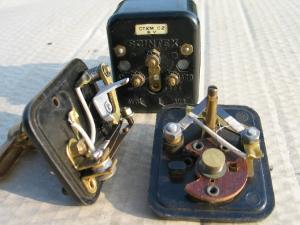
If anyone has successfully done what I intend doing, I would be grateful to know how they did it. Many thanks.
25th May 2026 at 11:00 am #38261Bernie
ParticipantPeter,
Yes, the Scintex unit should self-cancel but is not meant to provide an audible warning signal.
I always preferred the equally period purely mechanical (clockwork) switch which is less prone to failure, having no electrics to go wrong. They do “tick” but do not have an audible warning. Original versions have a warning light similar to your switch, but some modern replacements are available without a built-in lamp.
I suggest you open up your unit and remove all the guts except the basic switch contact to which you can wire your system.
And maybe try a higher Wattage festoon as the warning lamp?
Incidentally, my 15/6 indicators are not self-cancelling but, after 10 years, I manage to remember to switch them off at least 90% of the time.
B…..
30th May 2026 at 2:50 pm #38283ParticipantHi Bernie
Thanks for your advice. However, I have since acquired a Durite 3-way illuminated switch which, although the lever is green and the hole required in the dashboard needs to be a few millimetres larger diameter, will look very similar to the original. I also had to replace the 12v ‘grain of wheat’ bulb with a 6v one. With this and the electronic flasher unit with audible clicking sound from Classic Car LEDs I can dispense with the Scintex unit altogether and the replacement LED ‘bulbs’ in my indicators will work correctly.
Peter
-
AuthorPosts
- You must be logged in to reply to this topic.