Reply To: Fuel Gauge
Traction Owner’s Club › Forums › Technical › Electrics › Fuel Gauge › Reply To: Fuel Gauge
 Roger Grix
Thank you all for the feedback. I currently have a high-tech dipstick (Heh heh, I told them I’ve already got one, said with a French accent). However, being an electrical engineer, I do feel morally bound to make the electrical system work. 🙂
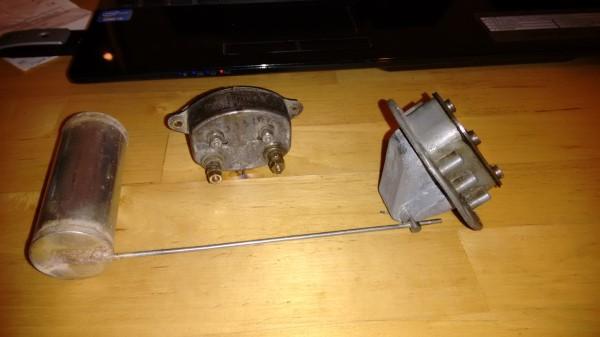
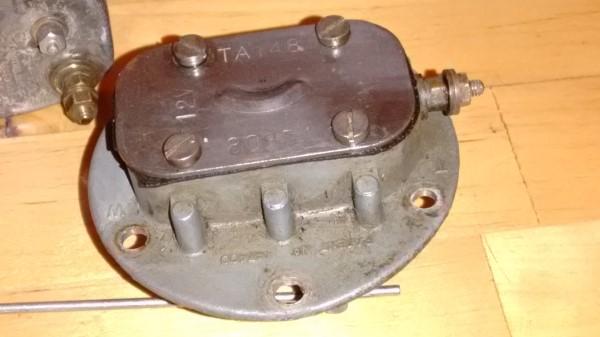
Following up on Chris’s reference to Alec Bilney’s article and from that to Steve Reed’s 2003 article, one thing has become very clear – not all petrol gauges and senders are created equal. The basic principles apply but the number of connections and arrangement of the sender differ. Mine has no damper and only one terminal.
Similarly, the resistances seem to vary depending on the model. Measuring from terminal B to terminal T gives a resistance of 60 ohms for the B coil. Measuring from terminal T to the case (earth) gives 100 ohms for the T coil. The sender variable resistor is about 1 ohm (Empty) and 86 ohms (Full).
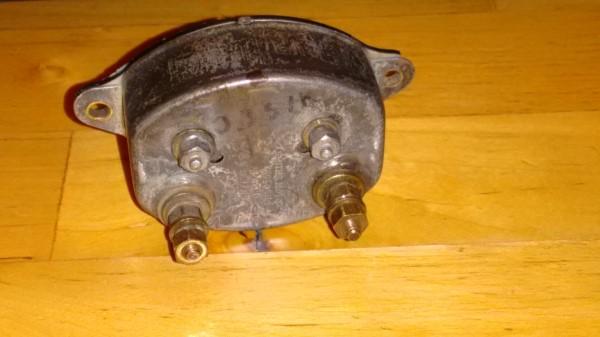
On the back of the meter there are the two terminals (B & T) and two small nuts on studs that are in slotted holes. This allows the coils to be move closer to or further from the needle armature to give each coil a variable effect on the needle movement. This should, I think, allow the setting of max and zero positions for full and empty.
With all the bits on my desk and a 12V power supply, I have so far managed to fiddle the coils to give me a range between about 1/8 to full tank indication. I am battling to get it to come to zero with the sender fully down. I’ll see what I can achieve today.